The American Experiment
From Revolution to Data Centers, Democracy Depends on the People Who Show Up

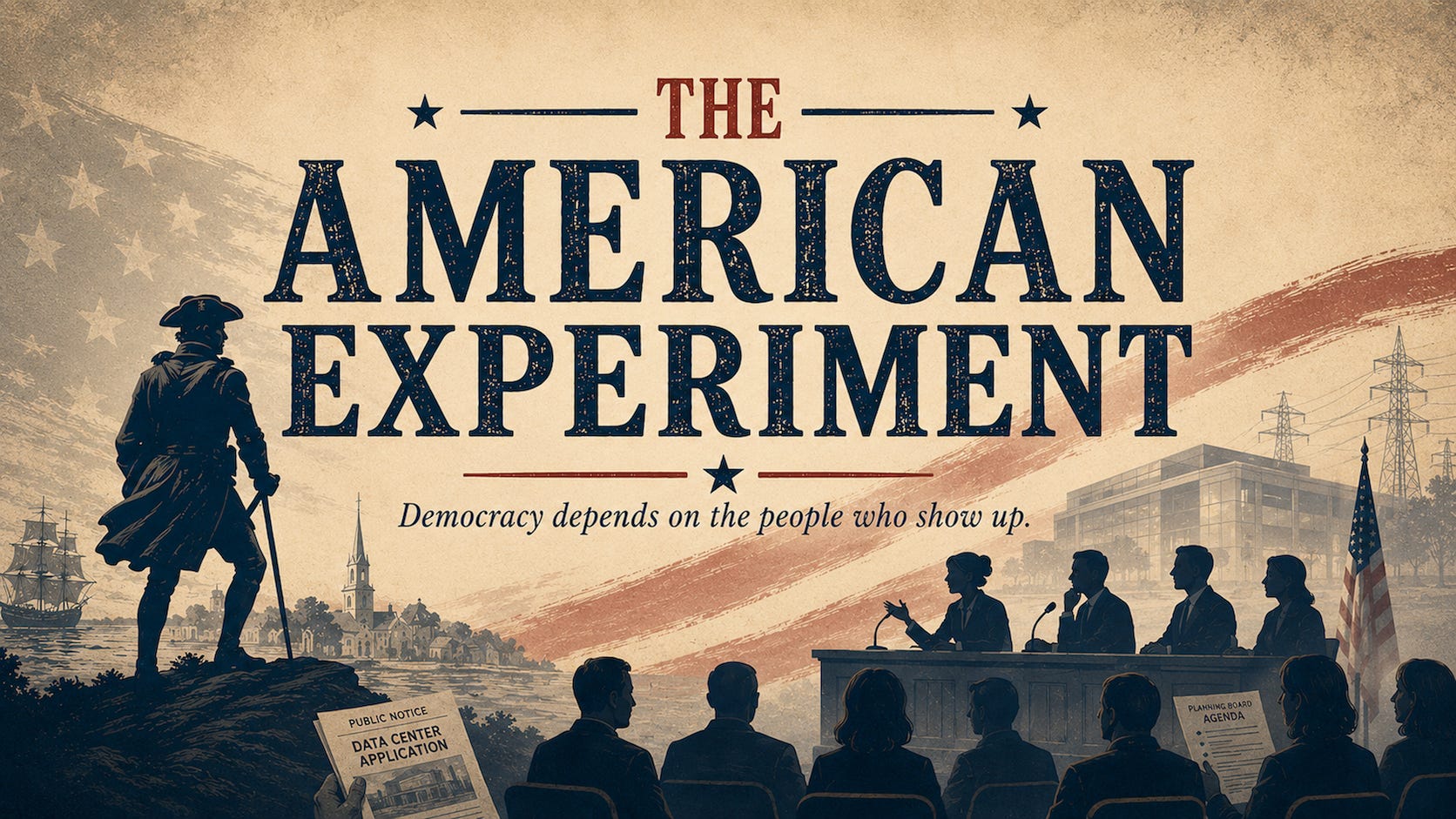
As we approach the anniversary of the American Revolution, I keep coming back to a simple idea at the heart of self-government. In June 1775, George Washington was making his way through New Jersey to take command of the Continental Army. The Revolution that followed was not really about tea, stamps, or taxes. Those were the sparks. The deeper argument was about who gets to decide.
Could decisions affecting ordinary people be made by a small group of powerful individuals far away, or did people have a right to participate in the decisions that shaped their lives? That question sounds like something safely tucked into history books, but it has never really stayed there. It keeps showing up, generation after generation, in different forms and different rooms.
That question does not stay in history books or marble buildings. It shows up close to home, in town halls, planning board meetings, zoning hearings, redevelopment plans, public notices, and agendas that residents are trying to read at 11 o’clock at night while wondering why local government documents seem designed for everyone except the public.
The Women of Edenton
Before the Revolution was fought on battlefields, it was also fought in the ordinary routines of daily life. One of the clearest examples came from Edenton, North Carolina, in October 1774, when 51 women, led by Penelope Barker, signed a resolution pledging to boycott British imports, including tea and cloth.
The Edenton Tea Party was not as famous as the Boston Tea Party, maybe because no one threw anything into a harbor, and apparently history has always had a weakness for dramatic staging. But in some ways, Edenton tells us something even more useful about democracy.
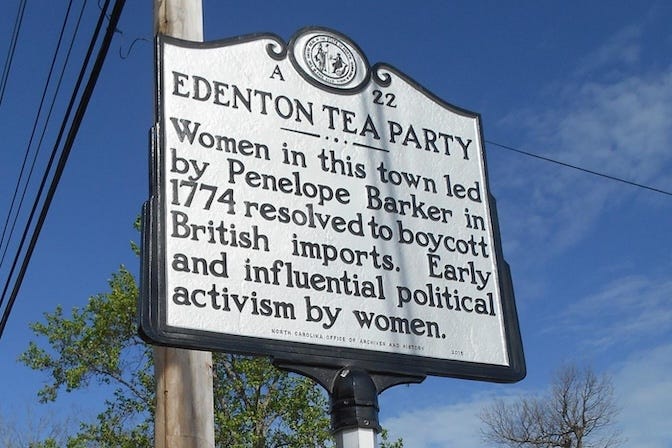
The women who signed that resolution were not members of Congress. They were not generals. They did not have the right to vote. They were not treated as full political actors in the world they lived in. But they understood that the politics of empire had entered their homes, their purchases, their communities, and their daily lives. Tea and cloth were not abstract policy questions. They were household goods, economic choices, symbols of control, and practical reminders that decisions made elsewhere could reach directly into ordinary life.
What made the Edenton Tea Party so powerful was not only the boycott itself. It was the public nature of it. These women signed their names. They did not hide behind anonymity or wait for permission to care about the political future of their community. At a time when women were expected to remain outside formal politics, they used the tools available to them: purchasing power, public agreement, moral pressure, household influence, and collective action. They understood something essential about self-government before the country had even declared itself independent. If a decision affects your life, you have a stake in it.
The Cloud Comes to Town
That is the part of the American experiment I keep coming back to now. Democracy has never belonged only to the people with titles, offices, legal authority, or seats at the first meeting. Again and again, ordinary people have entered public life because some issue crossed the threshold from abstract policy into daily reality.
That is why the current fight over data centers feels like part of the same longer story. Most people did not wake up one morning with a passionate interest in server farms, substations, industrial cooling systems, zoning classifications, or megawatt demand. They became interested because large, technical, consequential projects were suddenly being proposed in or near the places they call home.
At first glance, this looks like a story about technology. The headlines focus on artificial intelligence. Developers talk about economic growth, jobs, tax revenue, and innovation. Engineers talk about energy demand, cooling systems, fiber optic networks, and grid capacity. Environmental advocates raise questions about water, emissions, noise, and land use.
All of those questions matter. Communities should understand what is being built, what resources it will require, and what tradeoffs are being made. But the more I follow these debates, the more convinced I become that data centers are not really the story. The story is democracy.
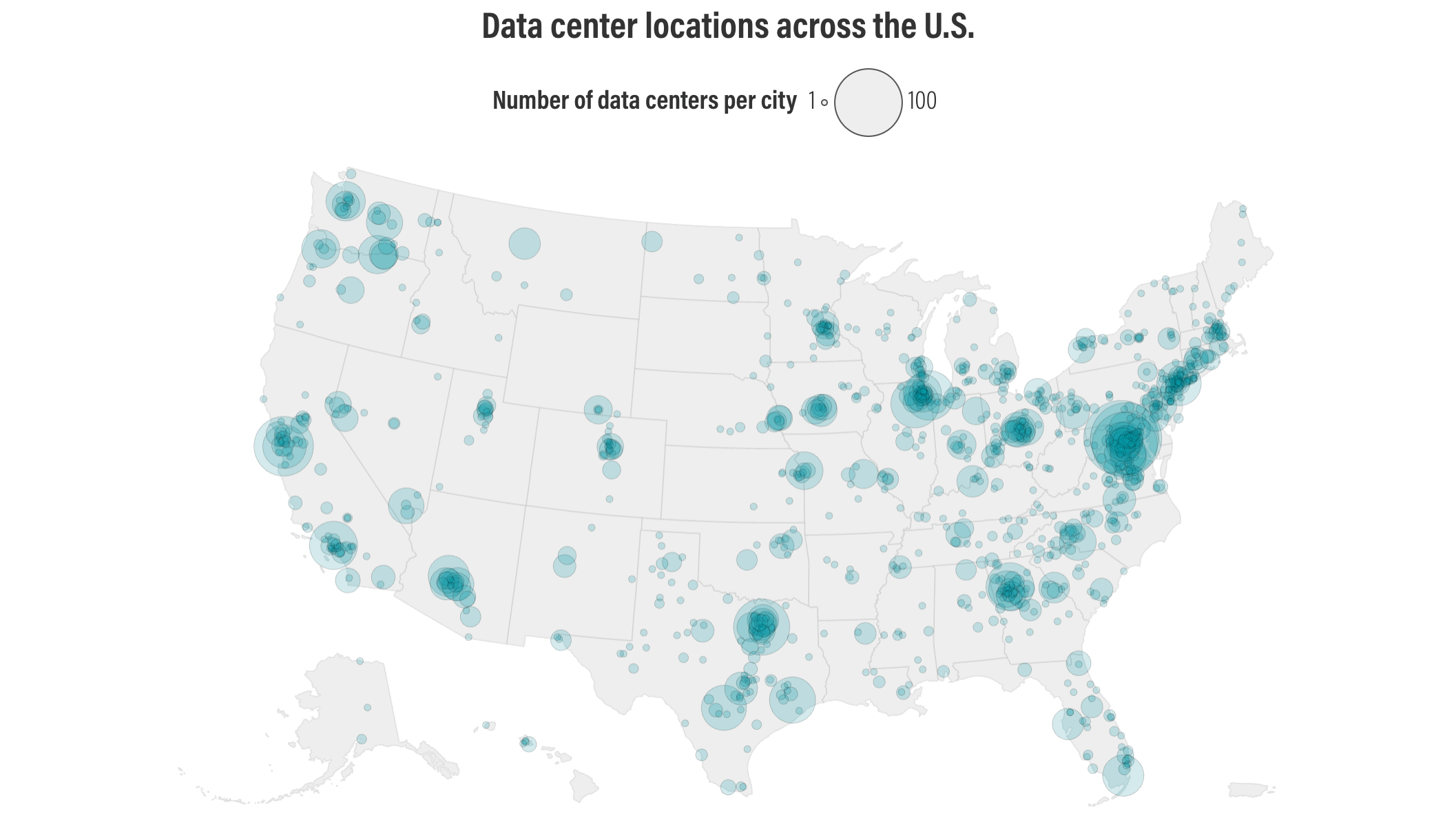
The cloud, as it turns out, is not actually a cloud. It is land, electricity, water, buildings, tax agreements, zoning approvals, utility upgrades, and public decisions. There is no magic server fairy quietly sprinkling bandwidth over America, although at this point I would not be surprised if someone tried to put that in a consultant report. Someone has to host the thing. Someone has to approve the thing. Someone has to live with the consequences of the thing.
Process Is the Point
That reality does not automatically make data centers good or bad. Some may be necessary. Some may be poorly located. Some may bring legitimate public benefits. Some may impose costs that are being politely minimized by people with very nice PowerPoint decks.
The better question is whether communities have enough information, enough time, and enough power to evaluate those tradeoffs honestly. Residents are right to ask how much power these facilities will consume, what they will mean for local infrastructure, whether promised economic benefits will actually materialize, who benefits from tax arrangements, who absorbs the costs, and how the project will affect the character, safety, environment, and long-term planning of the community.
Two hundred and fifty years after the Revolution, we tend to think democracy happens on Election Day. Of course, voting matters. It matters enormously. But one of the quieter lessons of American government is that democracy also happens afterward, in the ordinary machinery of public life. That is why we have public meetings, notice requirements, public records laws, planning boards, zoning boards, hearings, and voting procedures. These institutions were designed around a simple premise: no single person gets to decide what is best for everyone else.
That may sound obvious, but it is surprisingly easy to forget. So when I hear someone say, “It’s good for the town,” I think, maybe it is. Maybe it is not. But that sentence should begin a public conversation, not end one. “Good” can mean different things to different people. Growth can be good. Stability can be good. Business activity can be good. Quiet neighborhoods can be good. Efficiency can be good. Fairness can be better.
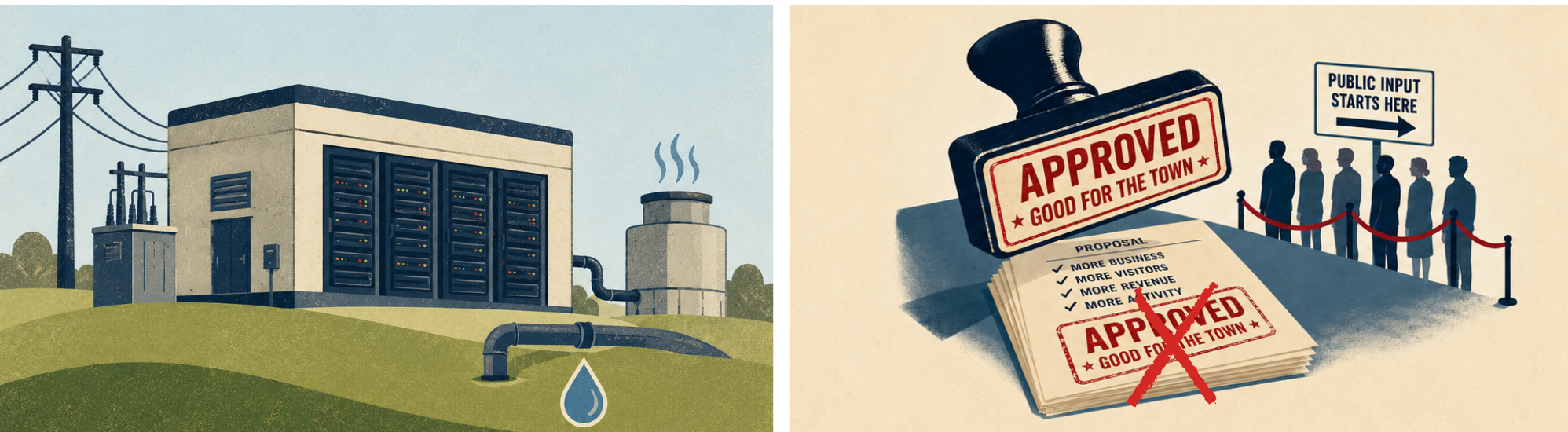
Anyone who has spent time around local government has seen how easily process can become technical instead of meaningful. A notice is technically published. An agenda is technically posted. A meeting is technically open. Somewhere, an attorney is very pleased with the word “technically.”
But democracy was never meant to operate on fine print alone. Public participation is not meaningful if residents only discover what is happening after the important choices have already been narrowed. A public meeting is not the same thing as public power. A comment period is not the same thing as consent. A legal notice is not the same thing as a community conversation.
The purpose of public process is not to make decisions harder for the sake of making them harder. It is to make decisions legitimate. It gives residents notice. It creates a public record. It allows questions to be asked before decisions are finalized. It forces competing interests into the open where they can be examined rather than assumed. It slows down the very human temptation to decide first and explain later.
The People Who Show Up
This is why ordinary citizens matter so much. Some of the most important people in the room are not always the ones seated at the front table. They are the ones in the audience with folders, screenshots, printed agendas, highlighted ordinances, and the unmistakable expression of someone who has just learned how often zoning laws are bypassed and is not thrilled about it.
They are not trying to become public figures. They are trying to understand what is being proposed in their community, what it will cost, who benefits, who decides, and whether the process is serving the public or simply managing it.
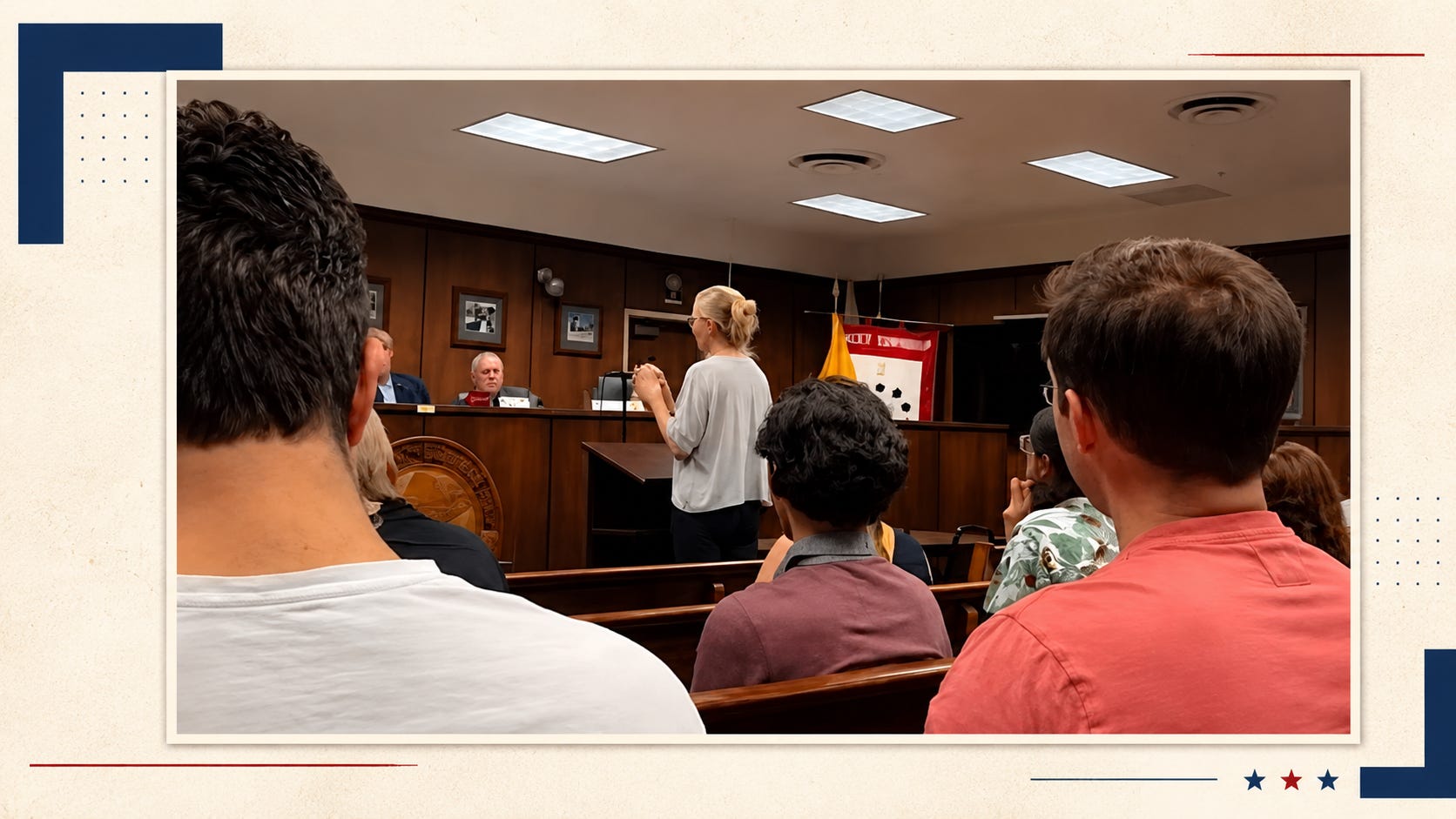
Many of them are women, not because data centers are a women’s issue in any narrow sense, but because women have always been central to the daily work of community life. Women are often the ones tracking what is happening in schools, neighborhoods, public health, local services, environmental quality, and the thousand small decisions that determine whether a place feels livable. They may not always hold the title. They may not always be invited into the first meeting. But they are often the ones who notice when something is changing and start asking the questions everyone else eventually realizes mattered.
That is the connection between Edenton and now. In 1774, women used the tools available to them to make a public claim about decisions that affected their lives. Today, residents are using the tools available to them to do the same thing. They are reading agendas, asking for applications, looking up zoning rules, attending meetings, comparing public promises to written documents, questioning tax agreements, tracking utility demands, and asking whether the public is being brought in early enough to matter.
There is something powerful in that moment when a person who once thought local government was too confusing, too boring, too technical, or too captured by insiders starts to realize that the system is not impenetrable. It is just poorly explained, inconsistently covered, and often protected by the exhausting confidence of people who benefit from everyone else feeling lost.
Once you understand the process, the room changes. You start to notice who speaks first and who stays silent. You understand why agendas matter. You learn where the real decisions are being made. You realize that “good for the town” is not an answer. It is a claim, and claims deserve scrutiny.
Where Democracy Begins
The future will almost certainly require more data centers. It will also require public trust. We cannot build the infrastructure of tomorrow by treating the public like an obstacle to be navigated around today.
Communities can adapt to change. They can weigh difficult tradeoffs. They can support projects that are well-planned, transparent, and accountable. What they struggle to accept, and what they should not be asked to accept, is being excluded from decisions that shape their future.
Data centers may be today’s controversy. Tomorrow it will be something else: a redevelopment plan, a warehouse, a school consolidation, a ferry terminal, a flood project, a housing proposal, or a new technology with an old political problem. The real story is not the server farm. The real story is what happens when ordinary people discover they have more influence than they thought.
The American experiment was never supposed to be one person deciding what is good for everyone else. It was supposed to be all of us having a voice in that decision. Sometimes that voice comes through a vote. Sometimes it comes through a petition, a boycott, a public meeting, a records request, a planning board question, or a neighbor sitting in the back of the room with a folder full of documents and a look that says she has read the agenda more carefully than anyone expected.
That, too, is democracy. In fact, it may be where democracy most often begins.
Fantastic essay on the importance of how everyone matters and everyone has a voice, as long as they use it. The old line “it’s good for the town, usually the “convincer”, the “forget about it, it’ll be fine” line. History shows that this throwaway line is often not right.
The truth is without truly critical thinking, with an educated public process encouraging real community involvement - the it’ll be good for the town is an empty thought. Learning about issues that impact all of us before they are decided - without a public (education) process of explaining what is really being proposed - not when it is seemingly signed, sealed and delivered for approval - is the real way to go.
Smart and honest government is contingent on educating those that it is designed to protect and serve. That is the government that I want - “by and for the people”.
Thank you Maggie for your ongoing thoughts on these issues and thank you for all the Penelope Barkers and unsung women who have heroically and courageously and consistently demonstrated the need for that want of knowledge and true participation in those processes that have made a real difference in all levels of our country.